






















The United Arab Emirates continues to solidify its position as a global hub for top talent, digital nomads, and entrepreneurs. While the core promise of an open, tax-efficient environment for freelancers remains strong, 2025 has brought significant updates to the UAE Freelance Visa and professional licensing frameworks. These changes are designed to enhance regulatory safeguards, ensure professional authenticity, and prevent the misuse of the visa system.
Here is a breakdown of what has changed and what you need to know to secure your self-employment future in the Emirates.
Key Changes to the UAE Freelance Visa and Licensing in 2025
The most notable shifts are centered on tightening the application process, particularly for renewals, to ensure applicants are genuine professionals operating within their declared fields.
1. Enhanced Screening and Proof of Professional Alignment
The biggest change is the increased demand for proof that your declared freelance activity aligns with your actual expertise and work.
- Tighter Verification Checks: Dedicated monitoring teams are now scrutinizing applications and renewals more closely to verify the authenticity of documents and the applicant’s professional background.
- Mandatory Evidence Package: When applying for a new permit or a renewal, authorities are increasingly requiring a more complete evidence package.
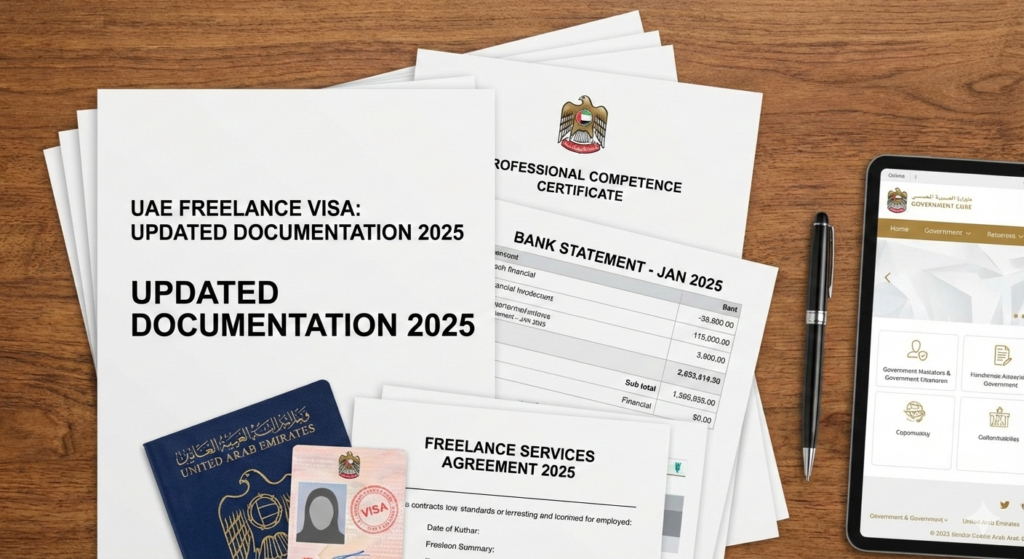
- Required Documentation: Proof of qualifications (attested degrees), professional portfolio, and client contracts or invoices are now essential to demonstrate genuine, active freelance work.
- Financial Scrutiny: Renewals often require 3-6 months of bank statements to confirm active income from freelance clients, proving you are earning within your registered specialisation.
2. The Dual License Rule for Influencers and Media Professionals
If your freelance work involves publishing paid content on social media, there’s a specific, critical update you must follow.
- Two Licenses Required: Under recent media law updates, influencers, content creators, and other media professionals earning from paid content must secure two separate licenses:
- A Business or Freelance License (issued by a Free Zone like Dubai Media City, UAQ FTZ, etc.)—this is your legal backbone to operate and earn.
- An E-media License from the UAE Media Council—this specifically authorises you to publish paid content legally.
3. Corporate Tax Compliance for Freelancers
As of 2025, freelancers are officially part of the UAE’s Corporate Tax framework.
- Registration Threshold: Freelancers earning above AED 375,000 annually must register for UAE Corporate Tax and file annually with the Federal Tax Authority (FTA). Even if your income is below this threshold, it is crucial to understand the regulations and maintain clear financial records.
4. Professional Mainland Licenses: 100% Foreign Ownership
For those securing a non-freelance, Mainland Professional License (for activities like consulting, accounting, or engineering), a significant benefit remains.
- No Local Partner Required: Professional service firms in the mainland can benefit from 100% foreign ownership, eliminating the need for a 51% Emirati partner. You will, however, generally still need to appoint a Local Service Agent (LSA) to liaise with government departments, but the LSA holds no equity in the business.
Streamlined Application Process: Step-by-Step
While requirements have tightened, the process remains streamlined, primarily through authorised Free Zones.
Step | Action Required | Key Documentation (New Focus) |
1. Select Licensing Authority | Choose a Free Zone (e.g., GoFreelance, RAKEZ, TwoFour54) that aligns with your professional activity (e.g., Media for designers, Tech for developers). | Updated CV/Resume |
2. Apply for Freelance Permit | Submit your application, proposed business activities, and fee payment. | Attested Academic Qualifications |
3. Provide Proof of Work | Crucially, submit documents proving your expertise and active work. | Portfolio / Work Samples, Client Contracts / Invoices |
4. Apply for Residency Visa | Once the permit is approved, apply for your 1, 2, or 3-year Residency Visa. | Valid Passport Copy, Recent Photo |
5. Finalise Visa Process | Complete the mandatory Medical Fitness Test and Emirates ID biometrics. | Medical Fitness Certificate |
6. Receive Credentials | Collect your Freelance Permit, Residency Visa, and Emirates ID. | N/A |
Conclusion: Secure Your Freelance Future
The 2025 updates to the UAE Freelance Visa and professional licensing system underscore the UAE’s commitment to building a robust, high-integrity economy. While the new requirements—particularly the enhanced scrutiny on professional alignment and compliance with Corporate Tax—demand more thorough preparation, the rewards of working in this dynamic global hub are immense. By understanding and proactively addressing these changes, you ensure a smooth application process and solidify your long-term residency and business success in the Emirates.
Want to know more?
Contact us today! We specialize in helping entrepreneurs get their business and banking off the ground.