

























Many entrepreneurs mistakenly believe their digital PDFs satisfy the new e-invoicing system in UAE requirements. However, Federal Decree-Law No. 16 of 2024 mandates a structured XML format that traditional documents cannot match. You likely feel overwhelmed by the technical jargon of PEPPOL networks and the pressure of upcoming deadlines. It’s natural to worry about choosing the right Accredited Service Provider while managing your daily operations.
We created this guide to transform these complex regulations into a clear, manageable roadmap for your business success. You’ll learn how to achieve full compliance and integrate these digital tools into your initial company setup seamlessly. We will explore the mandatory timelines, software selection processes, and practical steps to avoid monthly penalties of AED 5,000. Our goal is to ensure your transition remains hassle-free so you can focus on growing your enterprise.
Key Takeaways
- Understand the legal framework and why the Ministry of Finance mandates electronic data exchange for all UAE businesses.
- Discover how the PEPPOL 5-corner model forms the backbone of the e-invoicing system in the UAE to ensure secure transactions.
- Learn the critical difference between valid XML files and basic PDFs to avoid common compliance errors and administrative penalties.
- Follow a practical roadmap to identify your specific mandate phase and choose the right software for your business size.
- Integrate these regulatory requirements into your initial company formation process to build an efficient and future-ready business infrastructure.
What is the E-Invoicing System in UAE and Why Does It Matter?
What the E-Invoicing System represents is a move from manual paper processes to structured electronic data exchange. This shift ensures that invoices are transmitted directly between accounting systems without any manual human intervention or physical paper. The Ministry of Finance introduced the e-invoicing system in the UAE to strengthen the nation’s growing digital economy. It’s transforming how businesses interact with tax authorities by automating the reporting of every commercial transaction in real time. This process creates a transparent environment where the government can monitor financial activities with much greater accuracy and speed.
The Core Objectives of the UAE E-Invoicing Programme
Digitalizing the fiscal ecosystem supports the UAE’s vision for a completely paperless future by the end of this decade. This change provides the Federal Tax Authority with real-time transaction data to effectively monitor and reduce VAT leakage. Businesses will notice increased efficiency because electronic invoices move through the system much faster than traditional paper-based documents. Automated validation ensures that every transaction meets legal standards before it reaches the buyer, which prevents costly administrative delays. This streamlined approach allows finance teams to focus on strategic growth rather than repetitive data entry tasks every month.
Legal Foundations and 2026 Deadlines
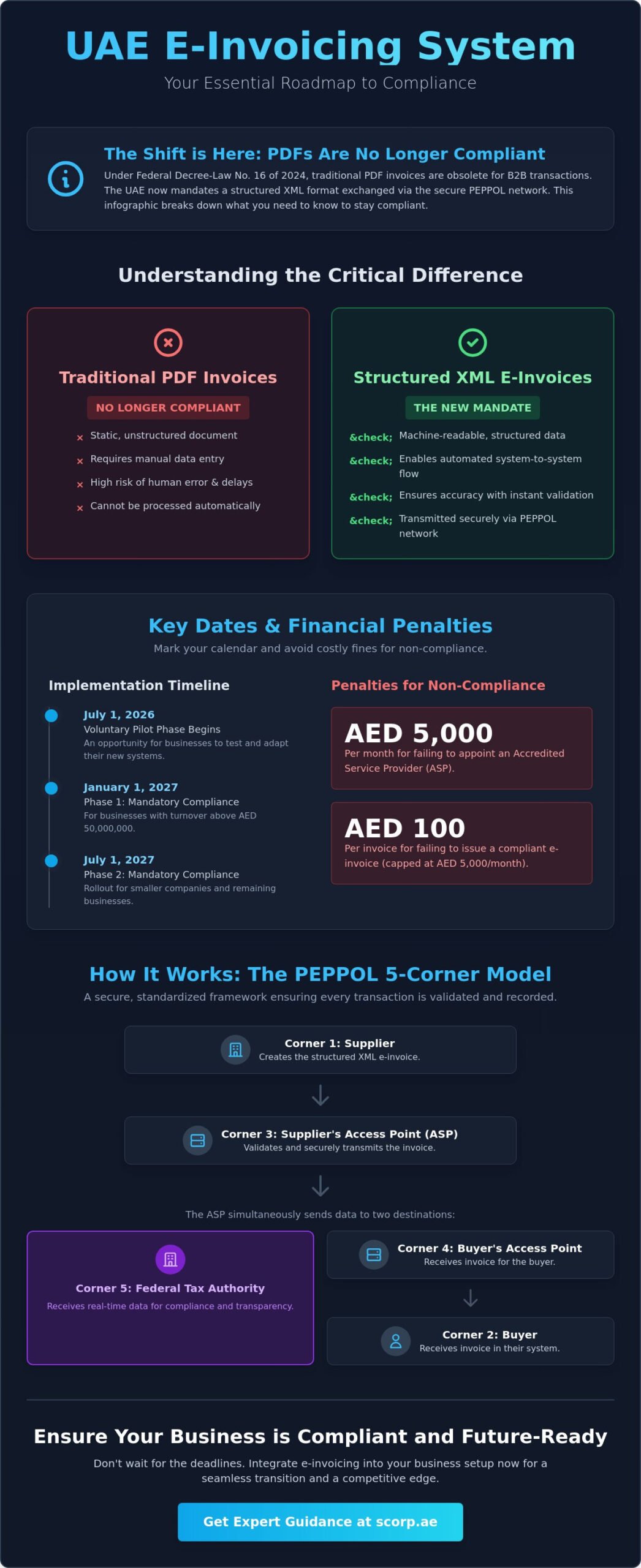
Ministerial Decisions Nos. 243 and 244 of 2025 establish the legal framework that every registered business must eventually follow. The 2026 rollout’s beginning with a voluntary pilot phase on July 1 to help companies test their new systems. Mandatory compliance for Phase 1 businesses with turnover above AED 50,000,000 starts officially on January 1, 2027. Smaller companies must implement the e-invoicing system in the UAE by July 1, 2027, to avoid significant fines. These penalties include a monthly fine of AED 5,000 for each month a business fails to appoint an accredited provider.
Cabinet Decision No. 106 of 2025 outlines specific penalties for failing to issue a timely electronic invoice as required. These fines reach AED 100 per individual invoice and are capped at a maximum of AED 5,000 per month. Understanding these financial risks is essential for maintaining a healthy business and avoiding unnecessary costs during the transition period. We recommend that you begin evaluating your current accounting software to ensure it supports the required structured XML format. This proactive step ensures your organization remains ahead of the curve as the government implements these digital reporting standards.
Adopting this technology represents more than a simple tax requirement for modern companies operating within the UAE mainland. It serves as a strategic upgrade that connects your business to a global network of digital trade and commerce. Transitioning early helps your team master the new workflow before the mandatory deadlines create pressure on your internal resources. By aligning with international standards, you position your company as a reliable partner in the competitive Middle Eastern market. Our team’s here to help you navigate these changes to ensure your business remains compliant while you focus on expansion.
How the PEPPOL 5-Corner Model Works in the UAE
The UAE government selected the PEPPOL framework to standardize digital transactions across all business sectors. This model ensures that different accounting systems can communicate with each other without compatibility issues. In this structure, the Supplier acts as Corner 1 while the Buyer occupies Corner 2 in the chain. These parties don’t send documents directly to each other like they do with traditional email attachments. Instead, they use Access Points, known as Corners 3 and 4, to securely transmit the invoice data. The Federal Tax Authority serves as the 5th Corner in the UAE’s e-invoicing system framework to receive real-time data. This centralized visibility allows the government to verify tax compliance and eliminate manual audits for most businesses.
Access Points act as digital post offices that validate the invoice format before sending it to the recipient. They ensure the data conforms to the PEPPOL standards used by the e-invoicing system in the UAE. Once the Access Point validates the file, it simultaneously transmits the data to the buyer and the FTA. This automated flow reduces the risk of human error and ensures that your business remains compliant with standards.
The Role of Accredited Service Providers (ASPs)
ASPs are technology vendors that the Ministry of Finance officially recognizes to manage these digital exchanges. You must use an ASP because they provide the secure gateway required to transmit compliant electronic invoices. When choosing a provider, prioritize those offering robust data security and seamless integration with your existing ERP. Selecting an ASP requires careful evaluation of their technical support and their ability to handle high transaction volumes. These providers must maintain high uptime to ensure your business operations never face interruptions during peak billing cycles. They also manage the encryption necessary to keep your sensitive financial data safe from external cyber threats. If you’re planning a new business setup in Dubai, selecting an ASP early prevents future administrative hurdles.
The XML Data Format Explained Simply
A common misconception exists that sending a PDF via email qualifies as e-invoicing under the new rules. The e-invoicing system in the UAE requires a structured XML format that computers can read and process automatically. Machine readability is essential because it allows accounting software to categorize expenses and file tax returns without errors. This structure eliminates the VAT leakage caused by typos or missing information in traditional paper-based invoicing methods. Every valid invoice must include mandatory fields such as the tax registration number and specific transaction dates. Your system must generate these files with precise details like the buyer’s address and the applicable tax rate. Implementing these systems might seem complex, but the long-term benefits for your operational efficiency are significant.
Structured vs. Unstructured Invoices: Clearing the Confusion
The biggest misunderstanding about the e-invoicing system in the UAE involves the format of the document itself. Many business owners assume that a PDF file sent through email qualifies as a valid electronic invoice. However, the Ministry of Finance defines an e-invoice as structured data that machines can process automatically. Unstructured documents like PDFs or Word files require manual data entry, which leads to frequent human errors. These manual processes often cause VAT leakage because the figures recorded by the buyer and seller don’t match. By switching to structured data, you eliminate these discrepancies and ensure your tax filings remain perfectly accurate.
Structured e-invoices use the XML format to allow for automatic matching between different accounting systems. When a supplier sends a structured file, the buyer’s system can verify the details without any manual typing. This seamless exchange ensures that every transaction is recorded accurately in the company’s financial books. You can learn more about How PEPPOL e-invoicing works in the UAE to understand these technical requirements better. Automation doesn’t just satisfy the tax man; it also speeds up your payment cycles and improves cash flow. Adopting these systems early provides you with a significant competitive advantage in the local UAE market.
Enhanced security remains another critical advantage of using structured data instead of traditional email attachments. Encrypted electronic transmission via Access Points protects your sensitive financial information from external cyber threats. Unlike standard emails, these secure channels ensure that the data remains unchanged during the entire transmission process. This high level of integrity is vital for maintaining the trust of your clients and the tax authority. By using an accredited system, you demonstrate a commitment to modern business practices and data protection.
Why PDFs Are No Longer Compliant
The Federal Tax Authority’s central system cannot automatically extract and process information from unstructured PDF files. Unstructured formats also carry a higher risk of document tampering, which compromises the integrity of your tax records. While you may still generate a PDF for internal viewing, the legal document is the underlying XML file. The system prioritizes machine readability to enable real-time oversight and faster tax processing for registered entities.
Common Mistakes to Avoid in 2026
Avoid assuming that your current accounting software automatically meets all the requirements for the e-invoicing mandate. Many companies wait until the final deadline to engage with an Accredited Service Provider, causing unnecessary stress. Failing to update your internal procurement processes will make it difficult to handle incoming e-invoices from your suppliers. Proactive planning ensures that your business avoids the AED 5,000 monthly penalty for non-compliance with the new standards.
A Practical Roadmap for UAE E-Invoicing Compliance
Preparing for the e-invoicing system in the UAE involves more than just a simple software update. It requires a strategic shift in how your finance department operates on a daily basis. You must follow a chronological plan to ensure your business meets the Ministry of Finance requirements. This roadmap provides the specific steps needed to transition from traditional invoicing to a fully digital, compliant environment. By acting early, you protect your company from the AED 5,000 monthly penalty for failing to implement the system.
Step 1: Assessing Your Current IT Infrastructure
You must first determine if your current accounting software can generate and receive XML files via the PEPPOL network. Many legacy systems don’t support these structured formats without significant modifications or expensive third-party plugins. It’s helpful to consult with a business setup expert to evaluate your existing compliance gaps. Planning for these upgrades well before the July 1, 2026, pilot phase prevents technical bottlenecks during implementation. You should also verify if your IT team can maintain the high uptime required for the e-invoicing system in the UAE.
Step 2: Selecting the Right Accredited Service Provider
The Ministry of Finance maintains an official list of pre-approved service providers that you should review carefully. Evaluate these vendors based on their ability to handle UAE-specific tax requirements and their integration with your current ERP. Ensure your chosen provider offers end-to-end encryption and maintains robust data residency within the United Arab Emirates. Choosing a local provider often simplifies the support process and ensures better alignment with Federal Tax Authority standards. You must appoint your provider by the specific deadlines to avoid administrative fines and operational delays.
Step 3: Updating Your Business Processes
Revise your master data to include mandatory fields like tax registration numbers and verified physical addresses for all clients. You also need to establish a clear protocol for handling rejected or disputed e-invoices within the digital network. Linking your new system directly to your VAT filing process will create a seamless flow for your quarterly returns. This integration reduces the time spent on manual reconciliations and minimizes the risk of expensive filing errors. Training your finance team on these new workflows ensures a smooth transition to the paperless digital economy. If you want to ensure your business is fully prepared, you can streamline your corporate compliance with our expert guidance today.
Streamlining Your Business Setup and Compliance with Sarsan Corporate Services
Setting up a business in Dubai requires careful planning to meet the latest digital tax standards. Sarsan Corporate Services integrates the e-invoicing system in the UAE directly into your company formation process. This proactive approach ensures your new enterprise remains compliant with all Ministry of Finance regulations from the start. We handle the technical complexities so you can focus on building your brand and securing your first clients. Starting your journey with a compliant foundation prevents the stress of retrofitting systems as deadlines approach in 2027.
Our team understands that entrepreneurs need to prioritize innovation and market entry over complex administrative paperwork. We act as a seasoned guide to simplify the transition into the UAE’s digital and paperless economy. By embedding compliance into your initial setup, we reduce the risk of future penalties and operational disruptions. You’ll receive a tailored roadmap that aligns your business goals with the specific requirements of the Federal Tax Authority. This strategic alignment creates a seamless path toward long-term growth and sustainable success in the competitive Middle Eastern market.
End-to-End Solutions for New Entrepreneurs
Sarsan Corporate Services provides comprehensive support, ranging from Free Zone setup to final tax registration and residency visa processing. We ensure your business remains compliant with the latest MoF mandates from the very first day of operations. Our experts simplify the process of choosing the right corporate structure to maximize your overall tax efficiency. This end-to-end solution covers every administrative detail to give you complete peace of mind during your business launch. Our team monitors the evolving regulatory landscape to keep your infrastructure ready for future digital updates and requirements.
Establishing an e-invoicing-ready infrastructure from day one eliminates the need for costly software migrations later in your journey. We help you identify the best Accredited Service Providers that integrate perfectly with your chosen business model. Our consultants provide clear guidance on maintaining your digital records to ensure they meet the 2024 legislative standards. This preparation allows you to enter B2B and B2G contracts with the confidence that your invoicing is fully compliant. We transform your entrepreneurial aspirations into reality by handling the heavy lifting of corporate and regulatory compliance.
Why Choose Sarsan Corporate Services for Your UAE Business Journey?
Experience a hassle-free setup with our team of seasoned corporate consultants who understand the local market dynamics. You’ll benefit from our transparent pricing and our unwavering commitment to your long-term entrepreneurial success. Join a community of successful businesses that rely on our expert guidance to navigate the complex Dubai landscape. We act as your trusted partner for ongoing VAT support and corporate compliance throughout your entire business lifecycle. Contact Sarsan Corporate Services today to start your compliant business journey with confidence and professional support.
Our relationship doesn’t end after your trade license is issued; we provide ongoing support for your growing enterprise. We offer tailored solutions for residency visa processing and mainland business formation to suit your specific expansion plans. Our commitment to transparency means you’ll never encounter hidden costs or unexpected administrative hurdles during our partnership. We pride ourselves on being a reliable expert that simplifies complexity for every client we serve in the UAE. Let us manage your regulatory obligations while you focus on scaling your business and achieving your professional goals.
Secure Your Business Success in the Digital Era
The transition to a paperless economy represents a significant milestone for every entrepreneur in the region. You now understand that valid compliance requires structured XML data rather than simple PDF attachments. Implementing the e-invoicing system in the UAE early protects your company from the AED 5,000 monthly non-compliance fines. This proactive strategy allows you to focus on innovation while meeting all Federal Tax Authority standards. Our roadmap ensures that you remain prepared for the mandatory deadlines beginning in 2027.
SCORP offers comprehensive end-to-end solutions that integrate regulatory requirements into your initial company formation process. Our team ensures a seamless experience with transparent pricing and no hidden costs during your setup journey. We invite you to start your compliant business in the UAE with Sarsan Corporate Services today. Your entrepreneurial aspirations are within reach when you partner with a trusted guide who simplifies complex regulations.