























Here’s a scenario: a Dubai-based tech founder discovered that one unclosed bank account could delay his residency visa for months. He feels the pressure to manage employee visa cancellations and multi-agency clearances without making a costly mistake. You could be undergoing the same feeling.
Closing a company in a Dubai free zone requires precision to protect your future business prospects in the United Arab Emirates. We understand that hidden liabilities and legal jargon can make the liquidation process feel overwhelming for even seasoned entrepreneurs.
Our expert-led guide provides a comprehensive, hassle-free roadmap to ensure you achieve a clean legal exit from the market. You’ll learn how to streamline the entire process, from appointing a registered liquidator to receiving your final de-registration certificate. We designed this resource to provide end-to-end solutions while avoiding the common pitfalls that trap many business owners. This step-by-step 2026 walkthrough covers everything you need for a seamless transition to your next ambitious venture in the UAE.
Key Takeaways
- Learn how to initiate the formal winding-up process by passing a board resolution and appointing a certified liquidator.
- Master the essential steps for closing a company in a Dubai free zone while following specific authority regulations efficiently.
- Discover the correct sequence for canceling residency visas and settling end-of-service gratuities to ensure full legal compliance.
- Understand the requirements for final financial audits and the necessary steps to close your corporate bank accounts properly.
- Find out how expert consultants provide end-to-end solutions to handle complex government coordination for a seamless business exit.
Understanding the Legal Framework for Closing a Dubai Free Zone Company
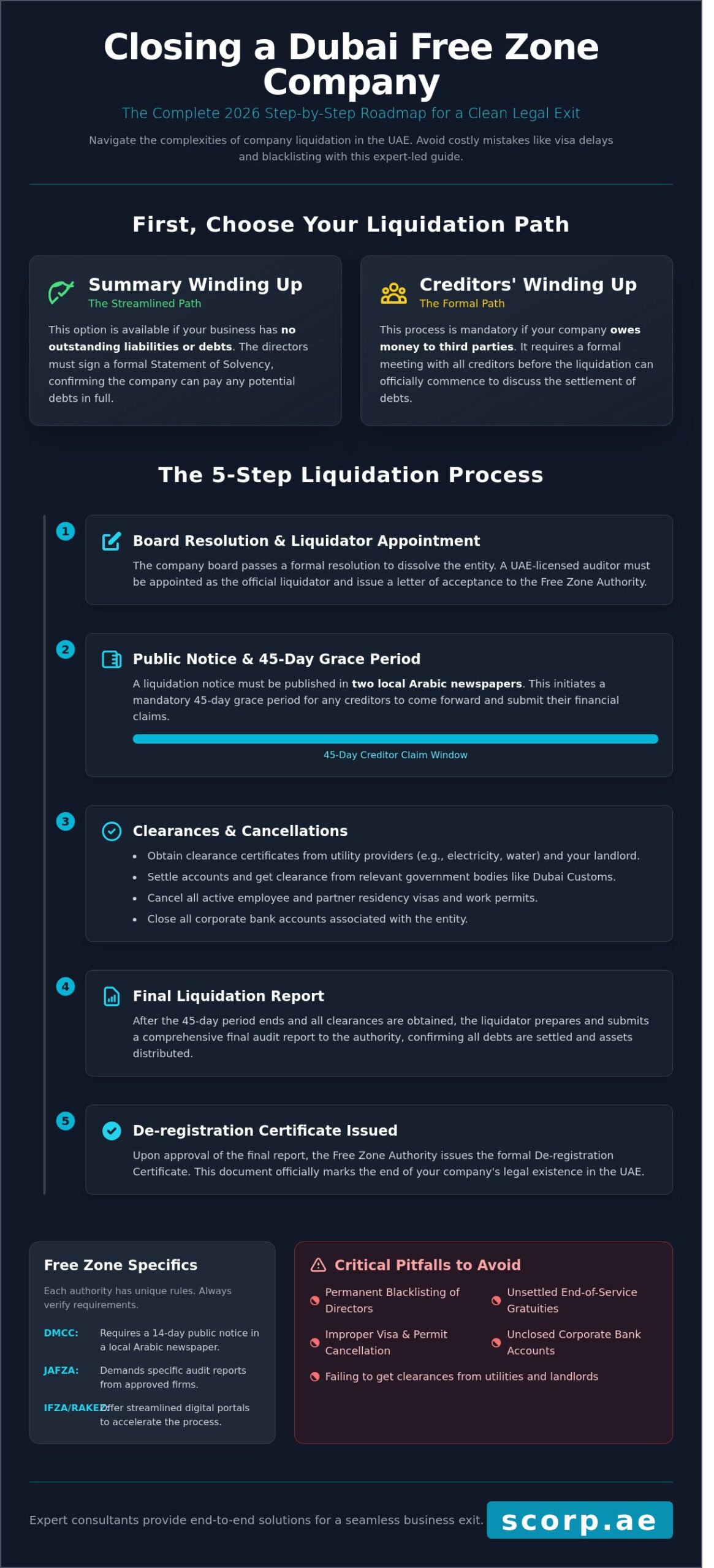
Closing a company in a Dubai free zone requires a formal process known as winding up. This legal procedure involves settling all outstanding debts and distributing any remaining assets to the shareholders. You must follow the specific regulations set by your free zone authority to avoid severe legal penalties. Ignoring these steps can lead to permanent blacklisting by UAE authorities for every director involved. It’s vital to understand the governing UAE Corporate Law before you begin the dissolution process. Our team provides the expertise needed to ensure your business exit remains professional and fully compliant.
Summary Winding Up vs. Creditors Winding Up
You can choose summary winding up if your business has no outstanding liabilities to settle today. Directors must sign a formal statement of solvency to confirm the company can pay its debts. If your company owes money to third parties, you must proceed with a formal creditors winding up. This path requires a mandatory meeting with all parties you owe money to before you start liquidation. Choosing the correct method ensures a seamless transition and protects your professional reputation in the local market. We offer end-to-end solutions to help you identify the best path for your specific situation.
Identifying Your Free Zone Authority’s Specific Requirements
Each authority has unique rules for document submission and public notice periods for a business closure. For instance, the DMCC requires a 14-day public notice period in a local Arabic newspaper for transparency. JAFZA often demands specific audit reports from approved firms before they issue a final license termination letter. Modern zones like IFZA or RAKEZ offer streamlined digital portals to accelerate the company cancellation process. You should verify if your specific license type needs extra approvals from external departments like Dubai Customs. Sarsan Corporate Services simplifies this complexity by acting as your dedicated guide through every regulatory hurdle. We ensure your closure is handled with the same care as your initial business setup.
Failing to cancel your visas and work permits correctly can result in unexpected fines from the government. You must also obtain clearance certificates from utility providers and your commercial landlord to finalize the process. Most free zones require an official board resolution that confirms the decision to dissolve the corporate entity. Taking these steps seriously allows you to explore future entrepreneurial aspirations in the UAE without any legal baggage. Trusting a seasoned partner makes the entire experience efficient and gives you total peace of mind.
The Step-by-Step Process to Liquidate Your Free Zone Entity
Successfully closing a company in a Dubai free zone requires a structured approach to meet all legal obligations. The process involves several administrative hurdles that demand careful attention to detail to avoid any unnecessary delays.
Board Resolution and Appointment of a Liquidator
The first formal step involves your company board passing a resolution to dissolve the entity and appoint a liquidator. This official document confirms that all shareholders agree to end operations and identifies the person managing the final affairs. You must select a liquidator who is a licensed auditor registered within the United Arab Emirates to ensure compliance. This professional will issue a formal letter of acceptance to your specific free zone authority before the process begins. This initial phase sets a clear path for a seamless transition while protecting the interests of all involved parties.
Public Notice and the 45-Day Grace Period
Once the authority accepts your resolution, you must publish a liquidation notice in two local Arabic language newspapers. This legal requirement triggers a 45-day grace period where any creditors can come forward to submit their financial claims. It’s vital to keep the original newspaper clippings because you need to submit them with your final documentation package. The free zone authority typically issues a preliminary certificate during this time to show the liquidation is officially underway. Managing this window effectively ensures that no outstanding liabilities block your path toward receiving the final deregistration certificate.
While closing a company in a Dubai free zone, you must gather clearance letters from various government departments. These documents prove that your business has settled all debts with entities like the local customs and electricity departments. You also need to cancel all active visas for employees and partners through the relevant immigration office systems. After the 45-day period ends, your liquidator will prepare and submit a comprehensive final liquidation report to the authority. This report confirms that the company has distributed its remaining assets and settled all its known financial obligations. You’ll then receive the formal deregistration certificate which officially marks the end of your business’s legal existence.
Navigating these regulatory steps can feel complex, but our team offers end-to-end solutions to simplify every stage.
Managing Employee Visas, Utilities, and Third-Party Clearances
Closing a company requires you to manage your human resources and utility obligations very carefully. You must cancel all residency visas before the free zone authority issues the final de-registration certificate for your business. This phase ensures that no outstanding legal or financial claims remain against the company after it officially ceases operations. Our team provides end-to-end solutions to help you handle these administrative tasks with total precision and professional care.
Cancelling Residency Visas and Settling Labour Entitlements
The UAE Labour Law (Federal Decree-Law No. 33 of 2021) dictates how you must handle employee terminations during liquidation. Every staff member must sign a final settlement form to confirm they received all salary and end-of-service gratuity payments. You should process these cancellations through the relevant immigration portal at least 30 days before your license expires. Directors must also cancel their own visas unless they have already secured a new sponsor for their residency status. Ensuring your labour file is cleared by the Ministry of Human Resources (MoHRE) prevents future blocks on other licenses.
- Employees must receive all dues including unused vacation pay and repatriation tickets if applicable.
- The company must provide a formal notice period to all staff as per their specific employment contracts.
- Original passports are no longer required for cancellation since most processes now happen through digital smart systems.
- You must settle any pending fines for expired visas or labour cards before the system allows cancellation.
Obtaining NOCs from Utility and Service Providers
Obtaining clearances from service providers is a critical step to avoid unexpected penalties during the process of closing a company in a Dubai free zone. You need to request a final bill from DEWA or your specific free zone utility provider to settle balances. Corporate telecommunication contracts with Etisalat or Du must be terminated to stop monthly charges from accruing on your account. Your landlord will require a formal inspection of the premises before issuing a final No Objection Certificate for closure. Companies involved in trading must also secure a clearance letter from the Dubai Customs department to finalize the process.
Managing these third-party clearances requires a structured approach to ensure you don’t miss any vital documentation or deadlines. If you need expert guidance to streamline these steps, please contact us for professional assistance today. We ensure your transition is seamless and your corporate record remains clean for any future entrepreneurial ventures in Dubai. Our experts handle the paperwork so you can focus on your next big opportunity without any lingering legal stress.
Financial Obligations and Final Audit Requirements for Closure
Financial settlement is the most sensitive phase of the exit process for any business owner in the UAE. You must resolve all debts and distribute remaining assets before the authorities can finalize your official license cancellation. This stage protects your professional reputation and ensures you remain in good standing with the local government for future ventures. Settling these matters correctly is a vital part of closing a company in a Dubai free zone without facing legal hurdles.
Preparing the Final Liquidation Report and Audit
Your appointed liquidator must draft a detailed report that outlines the final financial state of your business entity. This report explains how you handled company assets and confirms that you satisfied every outstanding liability to your creditors. Registered auditors must sign off on these documents to verify that no hidden financial risks remain for the state. This report serves as the primary evidence needed to obtain your final deregistration certificate from the free zone office.
The liquidator acts as the official representative who manages the distribution of all remaining company property to the shareholders. They must ensure that all employees receive their final settlements and that all utility providers receive their final payments. This professional oversight guarantees that the closure remains transparent and follows all regulations set by the Free Zone Authority. Our team provides end-to-end solutions to help you manage these complex requirements without any unnecessary delays or stress.
Closing Corporate Bank Accounts and Settling VAT Liabilities
You should notify your bank about the closure immediately since the administrative process can take four to six weeks. The bank will issue a formal closure confirmation letter once they settle all your pending transactions and service fees. This document is mandatory for the final stages of closing a company in a Dubai free zone with most authorities. You must also submit a VAT de-registration application within 20 business days of the date you stopped trading.
Missing this deadline leads to a 10,000 AED penalty which the Federal Tax Authority applies automatically to your account. You must ensure that all tax returns are filed and all outstanding tax payments are cleared before submitting the application. Once the FTA approves your request, they will issue a de-registration certificate which you must keep for your records. Most free zones require a final clearance certificate from the building management and the local electricity and water provider.
These clearances prove that you have met all contractual obligations and are ready to exit the market cleanly. Handling these details correctly ensures a seamless transition and keeps your path open for future business opportunities in Dubai. If you want a hassle-free experience, contact our experts today to manage your financial closure requirements with precision and care.
Why Professional Assistance Ensures a Seamless Company Exit in 2026
Closing a company in a Dubai free zone requires a high level of precision and expert legal knowledge. Professional consultants handle the complex coordination between the Free Zone Authority, UAE Customs, and the Ministry of Human Resources. They ensure that all employee visas are cancelled and final gratuity payments are settled according to UAE law. Sarsan Corporate Services provides end-to-end support to ensure your business exit remains completely hassle-free and legally sound. Our team manages the technical requirements so you don’t have to worry about missing critical 2026 regulatory deadlines.
Expert liquidators ensure that all legal notices appear in local newspapers to prevent future litigation against the directors. These professionals prepare the statement of affairs and the final liquidator’s report required by the specific free zone. They act as your primary liaison to ensure every government department issues the necessary final clearance certificates quickly. Outsourcing the closure process allows you to focus your energy on launching your next successful entrepreneurial venture elsewhere. You can trust our experienced team to navigate the bureaucratic layers while you plan your future business moves.
Avoiding Blacklisting and Regulatory Penalties in the UAE
Failing to close your business correctly can lead to severe consequences for directors and shareholders in the Emirates. Incorrect closure often results in permanent bans on future residency visa applications for all registered company members. Unpaid utility bills or active labor files can trigger travel bans and result in immediate legal cases in court. You might face administrative fines that exceed 10,000 AED if you ignore the mandatory newspaper advertisement requirements. Our specialists ensure all liabilities are settled so your reputation remains intact for your next commercial project. Learn more about our Dubai business setup services to prepare for your future growth in the region.
How Sarsan Corporate Services Streamlines Your Business Closure
We act as your trusted partner to manage the entire liquidation timeline with speed and complete transparency. Our team handles the mandatory newspaper ads, utility clearances, and final document submissions to the relevant authorities. We obtain the final liquidation certificate which officially removes your company from the registrar of the free zone. This comprehensive support removes the administrative burden so you can focus on new opportunities without any unnecessary stress. Contact us today for a consultation to ensure your company exit is handled with professional care.
Finalize Your Business Exit with Absolute Confidence
Navigating the legal steps for closing a company in a Dubai free zone requires precision and careful planning. You must settle all financial obligations and cancel employee visas to avoid any future legal or financial penalties. Professional liquidators handle complex government clearances and final audits while ensuring you meet every specific regulatory requirement. We provide transparent pricing with no hidden costs to make your company exit as smooth as possible. Our team provides end-to-end management of all government clearances so you can focus on your next venture. Don’t let administrative hurdles delay your progress or impact your reputation in the competitive Dubai market. Our experts simplify the liquidation journey by coordinating with all relevant free zone authorities on your behalf.
Ensure a clean exit with our professional liquidation services
A successful transition today sets the stage for new opportunities and growth in the vibrant UAE economy.